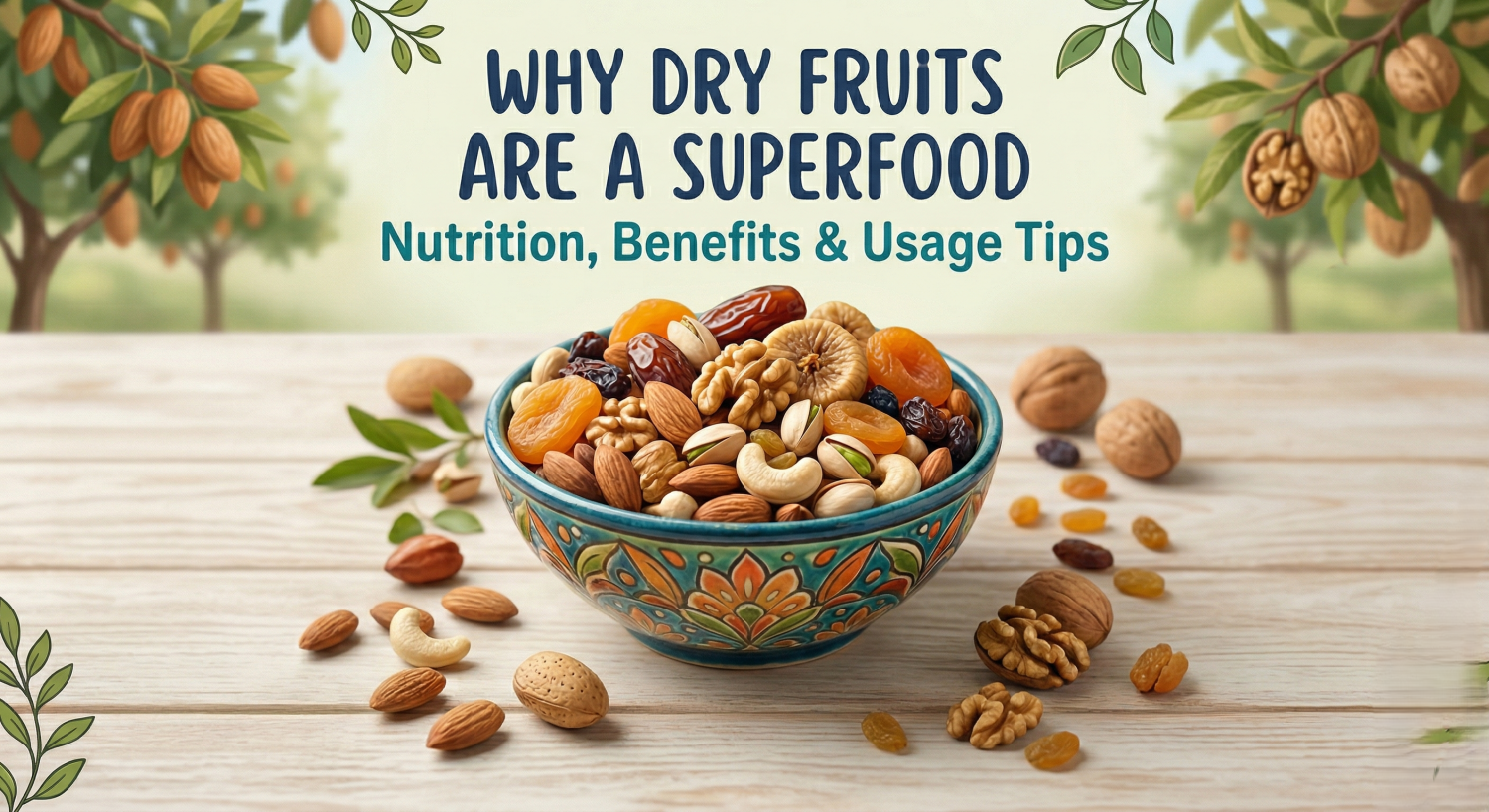
Why Dry Fruits Are a Superfood: Nutrition, Benefits & Usage Tips
Dry fruits have been an essential part of human diets for centuries. From traditional Indian kitchens to modern health-conscious lifestyles, dry fruits are widely known for their rich taste, long shelf life, and exceptional health benefits. But what truly makes them stand out is their powerful nutritional value, which is why they are often called a superfood. We will explore why dry fruits deserve the title of superfood, their nutritional profile, health benefits, and practical ways to include them in your daily diet.
What Are Dry Fruits?
Dry fruits are fruits that have had most of their water content removed either naturally (through sun drying) or through modern drying techniques. This process concentrates their nutrients and increases their shelf life.
Both types are packed with essential nutrients, making them highly beneficial for overall health. Dry fruits are generally divided into two categories:
- Nuts – Almonds, walnuts, cashews, pistachios, etc.
- Dried fruits – Raisins, dates, figs, apricots, etc.
Nutritional Value of Dry Fruits
One of the main reasons dry fruits are considered a superfood is their dense nutritional content. Even a small handful can provide a wide range of essential nutrients. Because of this rich composition, dry fruits provide high energy and nourishment in small quantities.
Key Nutrients Found in Dry Fruits:
- Vitamins – Vitamin E, Vitamin B complex
- Minerals – Magnesium, potassium, calcium, iron
- Healthy fats – Especially in nuts like almonds and walnuts
- Protein – Helps in muscle building and repair
- Fiber – Supports digestion and gut health
- Antioxidants – Protect the body from damage caused by free radicals
Why Dry Fruits Are Called a Superfood
A superfood is any food that is extremely rich in nutrients and offers multiple health benefits. Dry fruits perfectly fit this definition. Here’s why:
1. Nutrient-Dense Powerhouse
Dry fruits contain more nutrients per gram compared to fresh fruits. Removing water concentrates vitamins, minerals, and energy.
2. Natural Energy Booster
They are rich in natural sugars and healthy fats, making them an excellent instant energy source.
3. Long Shelf Life
Unlike fresh fruits, dry fruits can be stored for months without losing their nutritional value.
4. Versatile and Easy to Use
They can be consumed anytime—raw, soaked, or added to dishes.
Top Health Benefits of Dry Fruits
1. Boosts Immunity
Dry fruits are rich in antioxidants, vitamins, and minerals that help strengthen the immune system. Almonds and walnuts, for example, contain Vitamin E, which protects cells from damage.
2. Improves Heart Health
Many dry fruits contain healthy fats like omega-3 fatty acids, which are beneficial for heart health. Regular consumption can reduce the risk of heart diseases.
- Walnuts help reduce bad cholesterol (LDL)
- Almonds support healthy blood circulation
- Pistachios help regulate blood pressure
3. Supports Brain Function
Dry fruits like walnuts are known as “brain food” due to their shape and nutrient content. This makes them especially beneficial for students and working professionals. They help:
- Improve memory
- Enhance focus
- Reduce stress and anxiety
4. Aids in Digestion
Dry fruits like figs and raisins are high in dietary fiber, which helps maintain a healthy digestive system. Benefits include:
- Preventing constipation
- Improving gut health
- Supporting better nutrient absorption
5. Helps in Weight Management
Dry fruits can support both weight loss and weight gain, depending on how they are consumed. They keep you full for longer, reducing unnecessary snacking.
- For weight loss: Eat in controlled portions as snacks
- For weight gain: Add them to milk, smoothies, or desserts
6. Improves Skin and Hair Health
Dry fruits are rich in antioxidants and healthy fats that nourish the skin and hair. Regular consumption can result in healthier skin and stronger hair.
- Almonds help improve skin glow
- Walnuts reduce signs of aging
- Cashews support healthy hair growth
7. Strengthens Bones
Dry fruits like almonds and figs are rich in calcium and magnesium, which are essential for bone health. They help:
- Improve bone density
- Prevent osteoporosis
- Support overall skeletal strength
8. Controls Blood Sugar Levels
Despite being naturally sweet, many dry fruits have a low glycemic index when eaten in moderation. They are a healthy snack option for people with diabetes (in limited amounts).
- Almonds help regulate blood sugar
- Pistachios improve insulin response
Popular Dry Fruits and Their Benefits
Almonds
- Rich in Vitamin E and protein
- Good for skin and brain health
Walnuts
- High in omega-3 fatty acids
- Supports heart and brain health
Cashews
- Good source of iron and magnesium
- Helps in energy production
Raisins
- High in iron and fiber
- Improves digestion and boosts energy
Dates
- Natural sweetener
- Provides instant energy
Figs (Anjeer)
- Rich in calcium and fiber
- Supports digestion and bone health
Best Ways to Consume Dry Fruits
To get maximum benefits, it’s important to consume dry fruits in the right way.
1. Eat Them Raw
The simplest and most effective way is to eat them as they are.
2. Soak Before Eating
Soaking almonds, walnuts, and raisins overnight improves digestion and nutrient absorption.
3. Add to Breakfast
You can include dry fruits in:
- Oatmeal
- Cereals
- Smoothies
4. Use in Cooking
Dry fruits enhance both taste and nutrition in dishes like:
- Biryani
- Desserts
- Salads
5. Healthy Snacking
Instead of junk food, replace snacks with a handful of mixed dry fruits.
How Much Dry Fruits Should You Eat Daily?
Moderation is key when consuming dry fruits.
Recommended Daily Intake:
- Almonds: 5–10 pieces
- Walnuts: 2–4 pieces
- Cashews: 4–6 pieces
- Raisins: 10–15 pieces
Eating too many can lead to excess calorie intake, so it’s important to maintain balance.
Tips for Choosing the Best Quality Dry Fruits
To enjoy maximum benefits, always choose high-quality dry fruits.
Tips:
- Buy from trusted brands
- Avoid artificially colored or flavored products
- Check for freshness and texture
- Store in airtight containers
Good quality dry fruits not only taste better but also retain more nutrients.
Are There Any Side Effects?
Dry fruits are extremely healthy, but overconsumption can cause:
- Weight gain due to high calories
- Digestive issues if eaten in excess
- Allergic reactions in some individuals
Always consume them in moderation for the best results.
Also Read: Why Walnuts Are a Superfood: Nutrition Facts and Health Benefits
Conclusion
Dry fruits truly deserve the title of superfood due to their incredible nutritional value and wide range of health benefits. From boosting immunity and improving heart health to enhancing skin, hair, and digestion, they offer a complete package of wellness in just a small serving. Incorporating dry fruits into your daily diet is one of the easiest and most effective ways to stay healthy and energetic. Whether you enjoy them as a snack, add them to your meals, or include them in your morning routine, they can make a big difference in your overall health.
Happy Shells providing premium-quality dry fruits online that not only taste great but also support your healthy lifestyle. Choose wisely, eat mindfully, and make dry fruits a daily habit for a better and healthier life.
Frequently Asked Questions (FAQs)
1. Why are dry fruits considered a superfood?
Dry fruits are called a superfood because they are rich in essential nutrients like vitamins, minerals, healthy fats, and antioxidants. They provide high energy and multiple health benefits in small quantities.
2. Which dry fruits are the healthiest?
Some of the healthiest dry fruits include almonds, walnuts, pistachios, raisins, dates, and figs. Each offers unique benefits such as improved heart health, better digestion, and stronger immunity.
3. How many dry fruits should I eat daily?
A small handful is enough for daily consumption. For example, 5–10 almonds, 2–4 walnuts, and a few raisins or cashews are ideal to maintain a balanced diet.
4. Is it better to eat dry fruits soaked or raw?
Soaked dry fruits are often better because they are easier to digest and help improve nutrient absorption. Almonds and raisins are commonly soaked overnight before eating.
5. Can dry fruits help in weight loss?
Yes, dry fruits can support weight loss when eaten in moderation. They keep you full for longer, reduce unhealthy cravings, and provide essential nutrients without processed sugars.